A facility manager in Tulsa, Oklahoma sat down three days before a new cleaning contract was set to start and realized the eight-page proposal covering 12,000 square feet of office space never once mentioned who was responsible for buying disinfectant, paper towels, or trash liners. That gap is more common than most business owners expect, and it is exactly why the question do cleaning companies bring their own supplies comes up so often during vendor selection. The honest answer is that it depends on the company, the contract, and sometimes the type of facility being cleaned, which is exactly why it needs to be nailed down in writing before anyone signs anything.
Do Cleaning Companies Bring Their Own Supplies? Why the Answer Varies
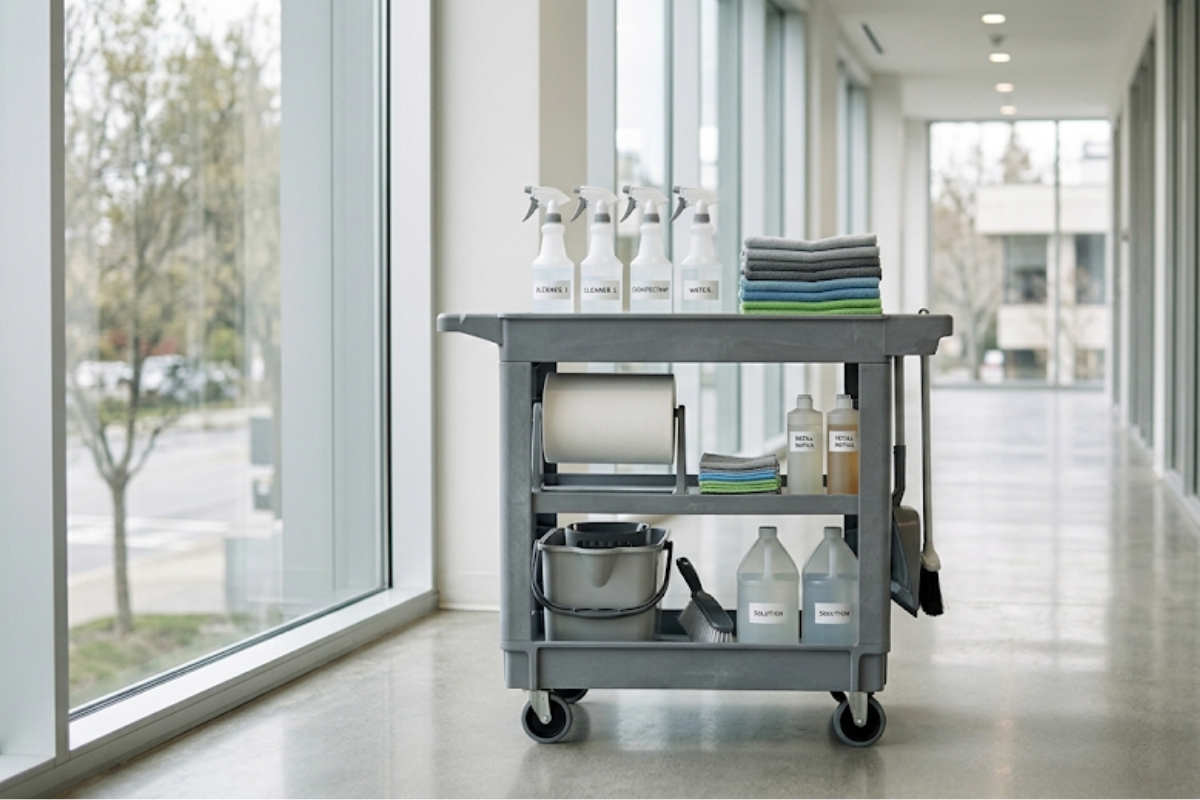
There is no single industry standard here. Some commercial cleaning companies show up with their own stocked carts, commercial-grade vacuums, microfiber cloths, and EPA-registered disinfectants, folding the cost into a flat monthly rate. Others operate on a model where the client keeps a supply closet stocked and the cleaning crew simply uses what is on site. Both approaches are legitimate and common across office buildings, medical suites, schools, and religious facilities. The deciding factors usually come down to the size of the account, the type of facility, whether specialty products are required for a particular surface or industry, and simply how the individual company has structured its pricing.
Facility type matters more than people expect. A financial office with strict data and cleanliness expectations may have different product requirements than a church that hosts weekend gatherings and weekday preschool programs, and a medical office often has stricter disinfection protocols than a general commercial property. Because product needs shift by setting, many companies handle the supplies conversation on a case-by-case basis rather than applying one blanket policy to every account, which is a point industry guidance from cleaning associations echoes as well.
Company-Supplied vs. Client-Supplied: How the Two Models Actually Work
Understanding the two common arrangements makes it much easier to ask the right questions during a walkthrough or proposal review. In the company-supplied model, the cleaning company purchases and brings its own products and equipment, and the cost is typically built into the service rate. In the client-supplied model, the business or property owner purchases and stocks the products, and the cleaning crew uses what has been provided on site. Neither model is inherently better. Each one shifts cost, control, and responsibility in a different direction, which is why the table below lays out what each option typically means in practice.
| Model | What It Typically Means | Pro | Consideration / Watch-Out |
|---|---|---|---|
| Company-Supplied Products & Equipment | The cleaning company purchases, stocks, and brings its own products, tools, and equipment, usually folded into the flat service rate. | One less purchasing task for the facility; consistent products used across every visit. | Confirm exactly which products and equipment are included so nothing is assumed or left out of the written agreement. |
| Client-Supplied Products & Equipment | The business or property owner purchases and stocks the products and equipment, and the cleaning crew uses what is provided on site. | The facility controls exactly which brands, ingredients, or scent-free products are used. | Someone has to track inventory and restock consistently, or the crew may be left without what they need. |
Either arrangement can work well for an office or larger commercial property, as long as it is written down clearly rather than assumed. The company-supplied model tends to mean one less purchasing task for the facility and consistent products used across every visit, though it is worth confirming exactly which products and equipment are included so nothing is assumed or left out of the written agreement. The client-supplied model gives the facility control over exactly which brands, ingredients, or scent-free products are used, for example items that meet the EPA’s Safer Choice standard for reduced chemical hazards, but it also means someone has to track inventory and restock consistently, or the crew may be left without what they need.
Why This Detail Belongs in the Contract, Not a Guess
Supplies and equipment are one of the most overlooked line items in a commercial cleaning agreement, right alongside scope of work and cleaning frequency. When a proposal is silent on the topic, both sides tend to assume the other one is handling it, and that assumption usually surfaces at the worst possible time, like a restroom running out of hand soap on a Monday morning. Product selection also carries a safety and compliance angle that is easy to miss. Any product used on a commercial account should come with proper labeling and safety data sheets under OSHA’s hazard communication standard, and staff handling those chemicals should know where that documentation is kept. This is not a reason to overcomplicate a simple service agreement. It is simply a reason to ask the question early and get the answer in writing rather than discovering the gap after the contract has already started.
Between scheduled visits, day-to-day upkeep also plays a role in how far any set of supplies stretches, whether they are company-supplied or client-supplied. A few consistent daily habits, like the routine covered in this guide on maintenance between professional cleanings, can reduce how quickly consumables like paper towels and hand soap run out, regardless of which side of the contract is buying them.
Questions Worth Asking Before You Sign
A short list of questions during the proposal stage can prevent almost every supplies-related surprise later on, and it also gives the crew handling those chemicals the clarity that NIOSH guidance recommends for protecting workers who use cleaning products.
- Who purchases and restocks disinfectant, paper products, and trash liners for this account?
- Are any specialty products required for our industry, such as medical-grade disinfectants or fragrance-free formulas?
- If the company supplies products, are they included in the quoted rate or billed separately?
- If we supply products, is there a minimum stock the crew expects to have on hand?
- Who is responsible for equipment like vacuums, mop systems, or microfiber tools?
Why Choose Premier Janitorial
The supplies and equipment conversation gets addressed directly during Premier Janitorial’s Free Facility Assessment, before a single line of the agreement is signed, so a business owner in Tulsa, OK is never left guessing who is buying what once cleaning starts. Because Premier Janitorial covers such a wide range of facility types, from office buildings and church and religious facilities to schools, medical offices, financial offices, and general commercial properties under property management, the right answer to the supplies question genuinely depends on the account. A financial office and a school do not have identical product needs, and treating them the same would not serve either one well. Rather than defaulting to a one-size-fits-all policy, that detail gets nailed down and put in writing as part of the assessment, matched to the specific facility, so the agreement that follows reflects reality instead of assumptions. The company describes itself as a family owned company that strives for excellence with professionalism, and for a topic as practical as who buys the disinfectant, that shows up as a straightforward conversation rather than fine print buried on page six.
A Few Factors That Tend to Shift the Answer
Facility type is not the only variable worth considering when this topic comes up during a walkthrough or proposal review, and buildings pursuing a greener cleaning program often lean on extension research when comparing product options.
- Square footage and how many restrooms or break areas need to stay stocked
- Whether the facility has specific brand, allergen, or low-fragrance requirements
- How frequently the space is cleaned, since more frequent service uses more consumables
- Whether the facility already has a preferred vendor relationship for paper products or chemicals
- Any industry-specific compliance requirements tied to disinfection or sanitation
None of these factors have a universally right answer. They simply shape which model, company-supplied or client-supplied, fits a given building best, which is exactly the kind of detail that belongs in a facility assessment rather than a guess.
What This Means for Your Facility
The single most useful takeaway is this: never assume. Whether a cleaning company brings its own products or expects the client to supply them is not a standardized industry rule, it is a contract detail, and the only reliable way to know is to ask directly and get the answer in writing before service begins. A reasonable rule of thumb is to treat the supplies question with the same seriousness as scope of work or scheduling, because leaving it unaddressed almost always leads to a stocked-out dispenser or an unexpected line item down the road. For a business in Tulsa, OK weighing a new cleaning vendor, that one conversation, held early, can prevent most of the friction that shows up later in the relationship.
If your current proposal is silent on who buys what, or you are evaluating a new cleaning partner for your building, reach out to Premier Janitorial to schedule a Free Facility Assessment and get every detail, supplies included, spelled out before you sign anything.
/Schedule Your Free Facility Assessment with Premier Janitorial and get a clear, written answer about supplies, equipment, and scope for your Tulsa facility before you ever sign a contract.
Frequently Asked Questions
Do cleaning companies bring their own supplies?
It depends on the company and the contract. Many commercial cleaning companies include products and equipment in their service rate and bring everything with them, while others work from supplies the client keeps on site. The arrangement should always be confirmed in writing before service starts.
Is it cheaper if I provide my own cleaning supplies?
It can be, since the client absorbs the product cost directly rather than paying it through the service rate, but it also means budgeting for and restocking those items consistently. Whether it actually saves money depends on how much is used and how the vendor prices each option.
Do commercial cleaning companies bring their own equipment, like vacuums?
Often, yes, larger equipment such as vacuums, mop systems, and floor tools is commonly supplied by the cleaning company as part of the service. Smaller residential-style arrangements are more likely to rely on equipment already at the location, so it is worth confirming for any specific account.
What cleaning supplies do professional cleaners typically use?
Professional cleaning crews generally use commercial-grade disinfectants, all-purpose cleaners, microfiber cloths, and paper products rated for regular business use. Some facilities also require specific certified or low-fragrance formulas depending on staff sensitivities or industry standards.
Should I ask a cleaning company about their supplies policy before hiring them?
Yes, this is one of the most practical questions to raise during a proposal or walkthrough. Getting a clear, written answer on who provides products and equipment helps avoid confusion, unexpected costs, or stocking gaps once service begins.