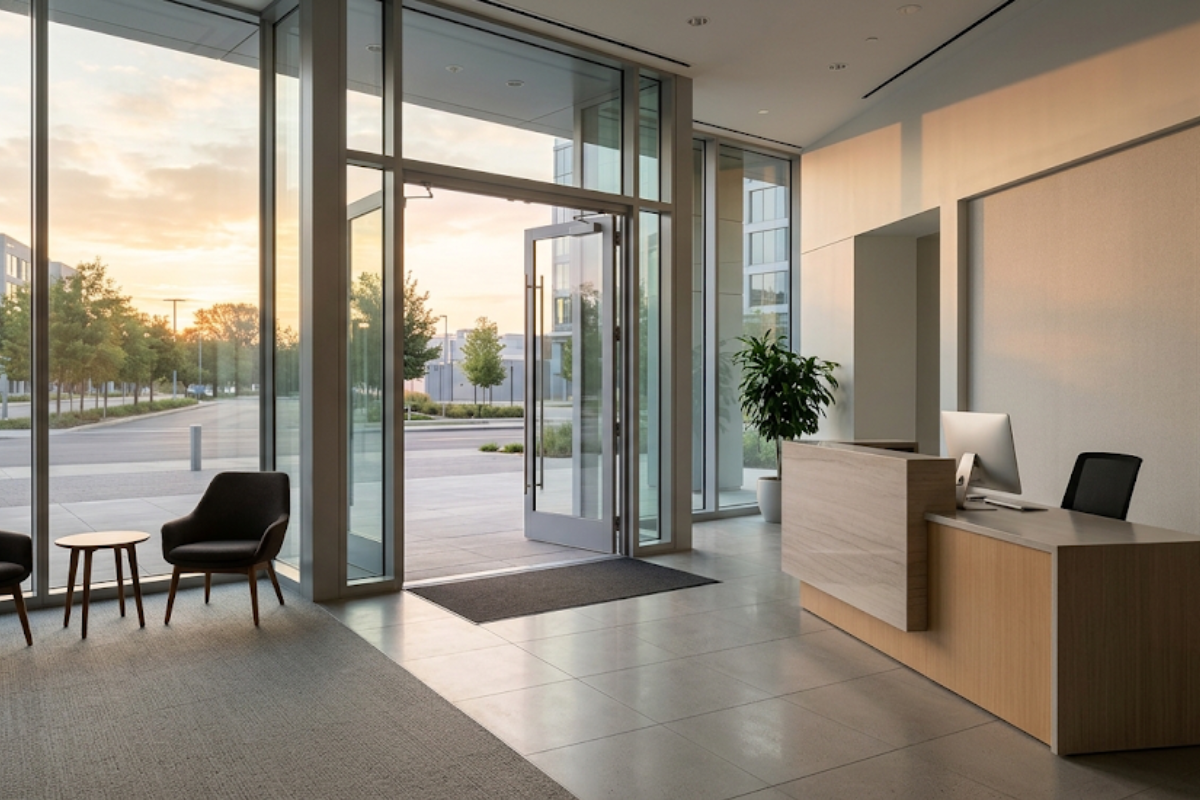
At 7:30 a.m., the office manager of a downtown Tulsa insurance agency unlocks the front door, steps into the lobby, and walks into a wall of sour, musty air that was not there when she left at 6 p.m. the night before. By 10 a.m., after the HVAC has been running for a couple of hours and thirty people have come and gone, the smell is gone and everyone forgets about it until the next morning. If you keep asking yourself “why does my office smell bad in the morning,” the answer is almost never one big problem. It is a handful of small sources that sit undisturbed for 12 or more hours while the building is closed, plus the Tulsa humidity that helps them along. This guide walks through what happens overnight, the most common sources, and what to check and fix for each type of smell.
What Happens Inside Your Office Between 6 p.m. and 7 a.m.
During business hours, an office is a busy, moving system. Doors open and close, the HVAC runs at full occupancy settings, and people are constantly moving air around simply by walking through it. The moment the last person leaves, all of that stops. Most commercial buildings set the thermostat back overnight to save on utilities, which is sensible, but it also means the air handler cycles far less often. Air goes stagnant, humidity creeps up, and anything that gives off an odor gets to release it into a closed space for the better part of half a day.
That is why the morning smell is so much stronger than anything you notice at 2 p.m. The concentration builds up overnight with nothing to dilute it. OSHA notes that the most common causes of indoor air quality complaints are not enough ventilation, poor HVAC upkeep, and dampness, and that occupants often notice musty odors as the first sign. An office that smells fine at noon and bad at 7:30 a.m. is usually telling you that the overnight ventilation is not keeping up with the overnight sources.
Why Does My Office Smell Bad in the Morning? The Usual Sources
The good news is that the list of overnight odor sources in a typical office is short and predictable. Walk through the building with these in mind and you will usually find the culprit in the first fifteen minutes.
- Trash and food waste. A kitchen can that received lunch leftovers at noon has been sitting for 19 hours by the time you unlock the door, and desk-side cans with a banana peel or a half-finished yogurt do the same thing on a smaller scale.
- Kitchen sinks and coffee pots. Coffee grounds left in the basket, a carafe with an inch of stale coffee, and food particles in the sink drain all ferment overnight and produce a sour smell that hangs over the break room.
- Restroom floor drains. Floor drains that rarely see water dry out, and once the water seal is gone, sewer gas has a clear path into the room.
- Damp mop heads and rags. A mop head or a pile of wet rags left in a janitor closet stays damp all night and produces a musty smell that leaks under the door.
- Carpets and upholstered chairs. Carpet fibers hold moisture and spilled drinks, and in a humid building they release that moisture, and its smell, when the air is still.
The restroom drain issue deserves a closer look because it is the one most managers do not think of. Every drain in a building has a P-trap, a U-shaped bend that holds a small amount of water to block sewer gas from coming up the pipe. As the Southern Davis Sewer District explains, unused drains lose that water to evaporation, and their advice is to run water in all P-traps at least once a month. A restroom floor drain, a mop sink in a closet, or a kitchenette sink in an unused wing can all dry out and start venting sewer gas into a closed building overnight.
How Tulsa Humidity Makes Overnight Odors Worse
Every one of the sources above gets worse when the air is damp, and in Tulsa, Oklahoma, the air is damp for a large part of the year. The National Weather Service office in Tulsa describes how moisture from the Gulf brings high humidity to the area, with spring as the wettest season and 100 degree days arriving from late July into early September. Understanding the Tulsa climate explains why an office that smelled fine in January starts smelling musty every morning by May.
When the HVAC setback kicks in overnight, the system is doing far less to pull moisture out of the air. Humidity climbs, carpets and fabric hold onto it, and anything organic in a trash can or a sink drain breaks down faster. The EPA recommends keeping indoor relative humidity below 60 percent, and ideally between 30 and 50 percent, to prevent mold growth, and it notes that wet materials need to dry within 24 to 48 hours. An office that sits closed at 70 percent humidity from Friday evening to Monday morning has given every damp surface in the building a long head start.
This is also why the smell fades by mid-morning. Once the HVAC returns to daytime settings, it removes moisture from the air and moves fresh air through the space, which dilutes and carries off what built up overnight. The sources are still there. The system is simply masking them for eight or nine hours a day.
Morning Odor Troubleshooting Table
Use the type of smell as your starting clue. Each of the four common morning odors points to a different overnight cause, a different place to check, and a different fix.
| Smell type | Likely overnight cause | What to check | Fix |
|---|---|---|---|
| Musty or moldy | Damp carpet, wet mop heads, or hidden moisture | Janitor closet, carpet near entrances, ceiling tiles, HVAC drip pans | Dry or replace wet materials within 48 hours, hang mop heads to dry |
| Sewer or rotten egg | Dried-out P-trap letting sewer gas through | Restroom floor drains, mop sinks, unused kitchenette sinks | Run water in every drain at least once a month |
| Sour or food | Trash, coffee pots, and sink drains sitting overnight | Kitchen cans, desk-side cans, coffee baskets, break room sink | Empty all trash and rinse coffee equipment and sinks every evening |
| Chemical or stale | Cleaning product residue and stagnant air from HVAC setback | Overnight thermostat schedule, product storage, fresh air intake | Adjust setback so air circulates, store products sealed, ventilate |
A musty or moldy smell usually traces back to damp carpet, wet mop heads, or hidden moisture, so check the janitor closet, carpet near entrances, ceiling tiles, and HVAC drip pans, then dry or replace wet materials within 48 hours and hang mop heads to dry. The EPA points out that a moldy smell with no visible source often means hidden mold behind a wall, under flooring, or above a ceiling, so a musty odor that persists after the obvious spots are dry deserves a closer inspection. A sewer or rotten egg smell points to a dried-out P-trap letting sewer gas through, so check restroom floor drains, mop sinks, and unused kitchenette sinks, and run water in every drain at least once a month. A sour or food smell comes from trash, coffee pots, and sink drains sitting overnight, so look at kitchen cans, desk-side cans, coffee baskets, and the break room sink, and empty all trash and rinse coffee equipment and sinks every evening. A chemical or stale smell is typically cleaning product residue and stagnant air from HVAC setback, so review the overnight thermostat schedule, product storage, and fresh air intake, then adjust the setback so air circulates, store products sealed, and ventilate. In most Tulsa offices, matching the smell to its row solves the problem within a week.
How to Fix It Before the Doors Open
The pattern across every row of that table is timing. The sources are created during the workday and left alone all night, so the fix is to remove or neutralize them after the last person leaves and before the first person arrives. That means the evening routine matters more than anything you do at 9 a.m.
Start with the kitchen. Every trash can with food in it should be emptied, bagged, and taken to the dumpster at the end of each day, not left for a twice-weekly pickup. Coffee baskets should be dumped and rinsed, carafes emptied, and the sink drain flushed with hot water. A splash of water down every floor drain and mop sink once a month takes two minutes and prevents the sewer smell entirely. Mop heads should be wrung out and hung, not dropped in a bucket. Entrance mats and carpet that get rained on should be dried, and any leak or spill on carpet needs attention the same day so it does not sit through a humid night.
If you manage a smaller space, our guide to keeping a small office smelling fresh covers the daily habits that keep these problems from starting. If you would rather have someone walk your building and point out exactly where the overnight sources are, you can contact Premier Janitorial to request a Free Facility Assessment. It is a straightforward walkthrough, not a sales pitch, and it usually surfaces two or three things a building’s daytime staff never had a reason to notice.
Finally, talk to whoever controls your HVAC schedule. A modest change to the overnight setback so the fan cycles a few times through the night, or so the building starts recovering an hour before people arrive, often does more for morning air than any air freshener. Air fresheners mask the smell. Ventilation and source removal get rid of it.
Why Choose Premier Janitorial for Overnight Office Odor Control in Tulsa
Timing is the whole reason a cleaning schedule either solves the morning smell or misses it. Premier Janitorial cleans Tulsa offices after hours, which means the trash, kitchen sinks, restroom drains, and food waste that would otherwise sit from 6 p.m. to 7:30 a.m. are handled before the doors open. Routine office cleaning covers entrances, offices, conference rooms, kitchens, restrooms, and open spaces, and the evening visit is built around removing the sources that turn into a wall of air the next morning: emptying and bagging every can, rinsing coffee equipment and break room sinks, and keeping restrooms and floor drains from becoming the weak point. Odor control and air quality are part of the approach, the same way they are for the medical offices Premier Janitorial serves. Because the company is based in Tulsa, Oklahoma, and also serves Broken Arrow, Bixby, Jenks, Owasso, and Sand Springs, the humid spring and late-summer stretch is a known factor in how the work is scheduled. The Free Facility Assessment starts with a walkthrough of the building to find where overnight odors are actually coming from.
Conclusion
The question “why does my office smell bad in the morning” has a practical answer. Between the last person leaving and the first person arriving, trash, food waste, sink drains, dried-out P-traps, damp mop heads, and carpet all sit in still, humid air with nothing to dilute what they release. The HVAC hides it during the day and the cycle repeats every night. Match the smell to its likely cause, check the spots listed for it, and fix the source in the evening rather than covering it up in the morning. In Tulsa, Oklahoma, where humidity does half the work for the odor, an after-hours routine that clears the kitchen, the restrooms, and the closets is the difference between a lobby that smells stale at 7:30 a.m. and one that does not.
Stop the morning smell before it starts. Request a Free Facility Assessment and we will walk your building with you. Contact Premier Janitorial online or call.
Frequently Asked Questions
Why does my office smell musty in the morning?
A musty morning smell usually means moisture that sat overnight: damp carpet, a wet mop head in a closet, a ceiling leak, or a dirty HVAC drip pan. Overnight thermostat setback lets humidity rise, and the odor builds in still air. If it persists once the obvious spots are dry, look for hidden moisture behind walls or under flooring.
Why does my office smell like sewer in the morning?
A sewer or rotten egg smell usually comes from a drain whose P-trap has dried out, letting sewer gas rise into the room. Restroom floor drains, mop sinks, and sinks in unused areas are common offenders. Pouring water down each drain restores the seal, and doing it monthly keeps the smell away.
Why does my office smell like trash?
Food waste in kitchen and desk-side cans breaks down quickly in a warm, closed building, and by morning it has had 12 or more hours to release odor. Coffee grounds and food in the sink add to it. Emptying all trash and rinsing the sink and coffee equipment every evening removes the source.
Why does the smell fade during the day?
When the HVAC returns to daytime settings, it moves fresh air through the space, lowers humidity, and dilutes what built up overnight. Foot traffic and open doors add movement. The sources remain; ventilation simply masks them until the building closes again.
Does humidity make odors stronger?
Yes. Damp air slows the drying of carpet and mop heads and speeds the breakdown of food waste, so odors form faster and linger longer. Keeping indoor humidity between 30 and 50 percent and drying wet materials within 48 hours reduces musty and sour smells.